“Warm winters are waking snakes early”
Dr Timothy Jackson, Dept Biochemistry & Pharmacology, co-authors The Conversation article in the lead up to Snakebite Awareness Day.
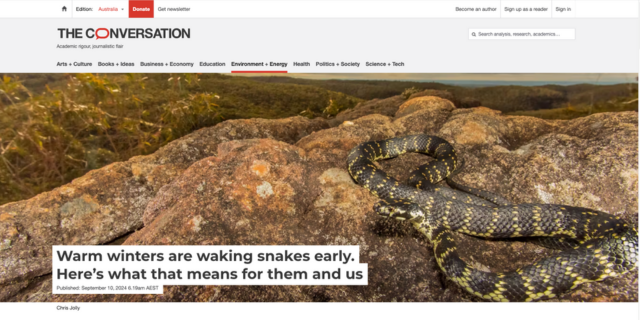
International Snakebite Awareness Day held annually on 19 September aims to educate and reduce the incidence of snakebite envenoming globally. Snakebite impacts the lives of millions of people in tropical and subtropical countries with up to 138,000 dying annually and between 300,000 to 500,000 disabled and maimed.
The Conversation article ’Warm winters are waking snakes early. Here’s what that means for them and us’ discusses the increase in snake sightings in the southern states of Australia during spring – and poses key questions as to whether climate change will lead to more snake encounters, the increased risk of snakebite as a result, and the impact of climate change on snake populations in Australia.
“Evidence suggests climate change could make snakes come out of hiding earlier however its also likely to cause population declines or changes long term, as snakes adjust to the new environmental conditions,” Dr Timothy Jackson shares in the article.
As snakes generally don’t want to be seen, increased visibility could indicate snakes are stressed. This may be an early warning sign of population decline.
Read the original article.
Safety around Snakes
- A snake seen and left alone poses little threat to humans
- When in snake habitat, know first aid and what to do in the event of a snakebite
Dr Timothy Jackson and Dr Andrew Watt - In the Media
ABC’s The Conversation Hour, 6 December 2023, ‘Snakes: Your Questions Answered.’
School of Biomedical Sciences, 20 September 2023, ‘Dr Tim Jackson talks ‘snakes’ with 3AW Afternoon’s Tony Moclair on International Snake Bite Awareness Day.’
ABC's The Conversation Hour, 4 September 2023, 'The Curious thing about snakes.’