Learning & leading on International Women’s Day 2024
This year we put the focus on our women research experts and teaching specialists who are working with the next generation of biomedical scientists, industry, commercial and healthcare professionals.
International Women’s Day is held on 8 March each year. The theme for 2024 is 'Count Her In: Invest in Women. Accelerate Progress' highlighting the need for us to celebrate the achievements of women, raise awareness about gender equality but also to acknowledge the work to be done in achieving equal participation in the economy for women.
When women are given equal opportunities to earn, learn and lead – entire communities thrive.
UN Women, 2024
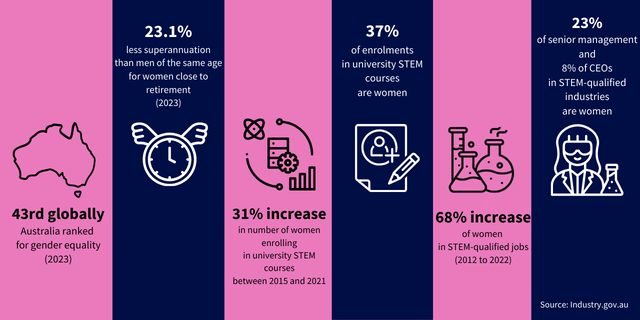
Image: Australia-at-a-glance
Professor Jennifer Wilkinson-Berka, Head of the School of Biomedical Sciences, said International Women’s Day is a day when all women are to be recognised for their achievements and represents an opportunity to acknowledge how far we've come and where the gaps still remain.

“Here in the School, 33% of our research groups are led by women and this number is growing – but there is always more that can be done. For Australian medical research, the rarity of women at senior levels will not change unless we actively implement change, starting with more equitable research funding outcomes.” Read more about the career development and momentum grants available in the School.
We are surrounded by amazing women leaders: researchers, academics, lecturers and professional support staff who are all working together with a shared purpose and vision. Lets take a moment to acknowledge and celebrate their many contributions.
Prof Jennifer Wilkinson-Berka
The Master of Biomedical Science Spotlight Series, launched at the end of last year, shines the spotlight on some of our School’s top women researchers and teaching specialists. These women are at the forefront of their profession – from finding immunotherapies to fight cancer, using stem cells to research future medicines, working on treatments for cystic fibrosis and inspiring the next generation through innovative teaching and mentorship.
Confidence is key for entering STEM fields. For both girls and boys, confidence in mathematics or science skills is associated with a higher likelihood of wanting to enter a job in those fields. Girls’ confidence in mathematics and science can be negatively affected by peers, parents and teachers who hold or pass on gender stereotypes in STEM.
UNESCO, 2024
We spoke to the stars from our spotlight series – together with other women experts across our School - to find out who inspired them to learn and lead and how they in turn are inspiring the next generation of biomedical scientists, industry, commercial and healthcare professionals.
Take a moment to watch our IWD 2024 ‘Talking role models’ video here
Department of Anatomy & Physiology

In our Master of Biomedical Science Spotlight Series: Research Possibilities, Dr Maria Di Biase talked about her love of mentoring and helping her students carve out their own unique pathway. Watch the series now
I have been privileged to work alongside trailblazers—Professors Alice Pébay, Christine Wells, and Sarah Whittle—who I’ve personally seen advocate courageously for equality in science.
Dr Maria Di Biase
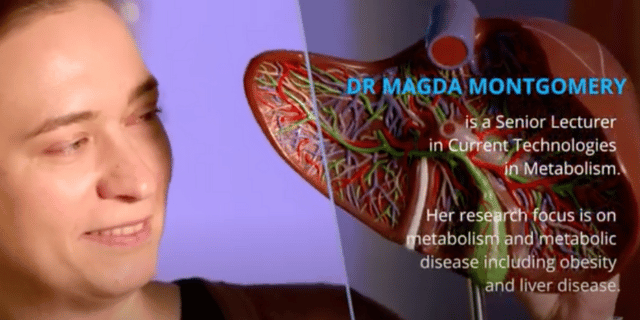
Last year, Dr Magda Montgomery was appointed as Editor-in-Chief of NPJ Metabolic Health and Disease journal. Read more
She also appeared in our Master of Biomedical Science Spotlight Series: Coursework Showcase discussing the advanced facilities and innovative technologies Masters students get access to. In her role as a Masters subject teaching specialist and research supervisor, Magda is proud to be teaching the next generation of biomedical scientists.
“The Master students I have worked with over the past few years were exceptional - showing curiosity in their research projects and innovation in new ideas on how to solve research questions. I can feel and see how they develop towards independent thinkers…it's great to see how they are not afraid to speak up, to discuss and even to criticise where required.”
Dr Magda Montgomery

Prof Christine Wells has been a role model to many. She featured in our Master of Biomedical Science Spotlight Series: Coursework Showcase where she talked about the exciting research she works with her Masters students on – and the importance of curiosity. Watch the series now
Read about Christine's role model in our IWD 2024 series: Inspired by peers & mentors
Department of Biochemistry & Pharmacology

Dr Robyn Brown is a behavioural neuroscientist looking to understand motivated behaviour, overeating in obesity and addiction."What is most exciting is that when I look around me today, I am not alone. When I started out in research and I looked for senior female researchers ahead of me they were few and far between. I realize this is just not the case any more - I am surrounded by the most amazing high calibre women and I find them truly inspirational."
Read about Robyn's role model in our IWD 2024 series: Inspired by peers & mentors

Prof Leann Tilley has made major contributions to understanding the molecular and cellular biology of the malarial parasite. Last year she won a lifetime achievement award for her research contributions.
For Leann, Rosalind Franklin – whose Xray crystallography work provided data that led to the discovery of the double helical structure of DNA – stands out as a role model. “For me, she was a great inspiration because of her sharp mind, very careful scientific approach and ability to stand her ground and take her place as a great scientist.”
Read about Leann's role models and the lessons she's learned along the way in our IWD 2024 series: Historical role models and why they matter.

Dr Elena Scheider-Futschik has been exploring the safety and effectiveness of Trikafta in pregnancy on mothers and their babies. The approval of Trikafta is a major breakthrough in the treatment of cystic fibrosis and sufferers are able to live longer, healthier lives. Read more about Elena’s latest research here.
In our Master of Biomedical Science Spotlight Series: Coursework Showcase Elena highlights the research possibilities for students in her lab along with the importance of curious minds. Watch the series here
Read about Elena's role models in our IWD 2024 series: Historical role models and why they matter.
Department of Microbiology & Immunology
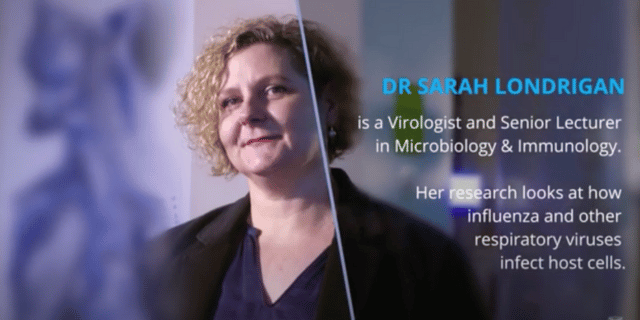
Dr Sarah Londrigan starred in our Master of Biomedical Science Spotlight Series: Coursework Showcase where she talks about the skills her Masters students learn - from the latest research techniques to the soft skills employees are looking for. Watch the series now
One of Sarah’s role models is Professor Liz Hartland, Director and CEO Hudson Institute. Sarah met and Liz here at the University of Melbourne: “Liz juggled the demands of a young family, teaching, academic promotion, an executive role while running an incredibly successful research program. I thought it was remarkable at the time - and now that I find myself managing my own work and family commitments, I find it even more incredible that she could also always make time to chat!"
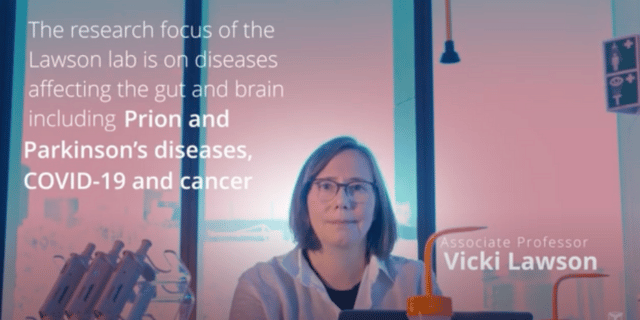
Prof Vicki Lawson was interviewed for our Master of Biomedical Science Spotlight Series: Research Possibilities where she highlighted the cutting edge technologies and biomedical research community that Masters students get exposure to. Watch the series now
For Vicki, it’s her peers who have always inspired her and the support of peer mentors along the way. Read Vicki's story in our IWD 2024 series: Inspired by peers & mentors

One of Prof Laura Mackay’s many recent achievements was becoming the youngest fellow elected to the Australian Academy of Health and Medical Sciences. Read more
“I would encourage the younger generation of biomedical scientists to explore the creativity afforded by research, to seek mentors who will support and inspire, and to embrace setbacks as an opportunity for advancing knowledge and personal growth.”
Laura featured in our Master of Biomedical Science Spotlight Series: Research Possibilities where she speaks about what intrigues her students - especially the process of discovery science. Watch the series now
Gender equity for a sustainable tomorrow
The School supports the career development and momentum of female researchers through a number of grants including (1) the $100,000 annual Fabienne Mackay Award to help one or more high performing, independent researchers to maintain research momentum following the birth or adoption of a child and (2) the MJ Gething Gender Equality Award help early career researchers continue career momentum while also having significant caring responsibilities.
Are you interested in a career in STEMM in the School of Biomedical Sciences?
We’ve put together a few resources to get you started: