Breathing easier: asthma research across the School brings hope for a cure
Here's the latest CURE Asthma research initiatives in the School of Biomedical Sciences set to transform asthma treatment.

Asthma is a major global health issue affecting 260+ million people around the world and 450,000 deaths each year worldwide. In Australia, Asthma affects 1 in 10 people and while it can be treated, it can’t yet be cured. Modern treatments can help control asthma but the disease can be under-diagnosed and patients often don’t have adequate asthma management and treatment plans in place.
The CURE Asthma Initiative is a groundbreaking national research collaboration working towards a cure for the disease. Led by the University of Melbourne together with Asthma Australia and Professor Gary Anderson from the Dept of Biochemistry & Pharmacology in the School of Biomedical Sciences, the Program brings together the very best in asthma research from around Australia.
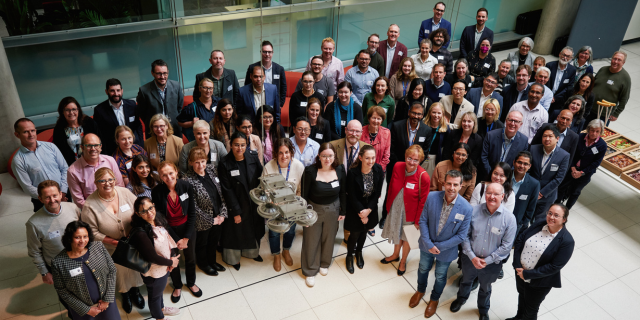
Image: CURE Asthma Symposium 2024
Here in the School of Biomedical Sciences, we have some truely brilliant young scientists who are working on a CURE Asthma initiative right now.
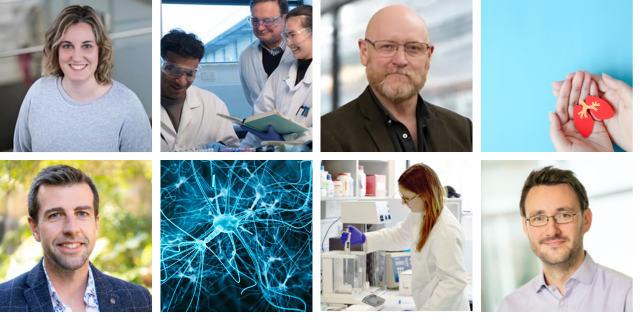
Gary’s own research, together with career-long collaborator Margaret Hibbs and colleagues at Monash, has been looking at why some people get severe, progressive asthma, why some people suffer long bouts of asthma, learning more about how asthma’s long term impacts on fixed airway obstruction - and why asthmatic airways are more susceptible to viruses.
His latest research published in the journal, Lung Cellular and Molecular Physiology, has discovered a potential new medicine that is able to reverse the cells in the lungs lining that cause mucus overproduction.
Our latest research has strong potential to contribute to important advances in asthma care. It's an exciting time in clinical medicine where some people with asthma are able to achieve 'on-treatment' remissions. With our future research, we want to make this an expected and permanent outcome of treatment.
In the School of Biomedical Sciences, asthma and other chronic lung diseases continue to be at the forefront of research efforts with many of our experts working to find better treatments - and ultimately a cure - for asthma.
Here's a look at some of the other innovative research projects underway across the School.
Digital Twins
A/Prof Michael Menden, Computational Biomedical Researcher & Head of Laboratory (Dept of Biochemistry & Pharmacology), specialises in applying artificial intelligence (AI) and machine learning to biomedical challenges. His lab focuses on creating digital twins—virtual models of patients—that simulate disease progression and treatment responses. These models are instrumental in understanding the transition from health to disease, particularly in asthma, and in identifying distinct disease subtypes (endotypes) and potential pathways to remission or cure.
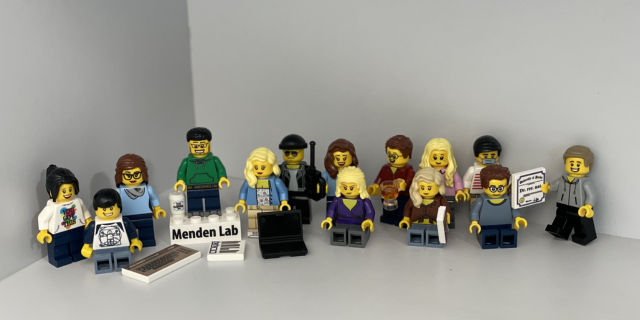
Image: Menden Lab (Lego)
At the 2025 TSANZ Symposium titled “CURE Asthma: A 10-year ambition”, A/Prof Menden presented on how digital twin technology can explain the trajectories between health and disease in asthma. His insights are integral to the CURE Asthma initiative's mission to develop precision medicine approaches for asthma treatment.
“This is amazing work - bringing discovery science to these advanced clinical trials models is the way we will move forward to a cure,” says Prof Gary Anderson.
Epigenetics of the Immune System
Research Group Leader, Dr Christine Keenan (Dept of Biochemistry & Pharmacology) is working with the epigenetics- local changes in how DNA is regulated that change in cells of the immune system and tissues and how it causes asthma. Her innovative work has contributed to the body of research looking at potential new treatments for asthma that target the causes of the disease rather than masking symptoms.
Omics Data & Imaging
Based in Prof Gary Anderson’s laboratory (Dept of Biochemistry & Pharmacology), Dr Aowen Zhuang works integrating omics to uncover new molecular pathways involved in rapid lung function decline in Chronic Obstructive Pulmonary Disease (COPD) where early life asthma is a major risk and likely cause. This work builds on the world-leading TAHS “whole of life” epidemiology study led by Professor Shyamali Dharmage in the School of Population & Global Health.
Disease of Development
A/Prof Elena Schneider-Futschik, an expert in cystic fibrosis (Dept of Biochemistry & Pharmacology) is also working to understand if asthma is a disease of development.
With this project we are looking if we can identify an early biomarker to predict development of asthma later in life, using multi-omics in a preclinical model.
Lung Nerves
Prof Stuart Mazzone, Research Group Leader of the Respiratory Sensory Neuroscience Laboratory (Dept of Anatomy & Physiology), is looking at lung nerves and their relationship to asthma - specifically the role of the nervous system in airway injury and repair in asthma.
Respiratory diseases are not just about the lung - inflammation and plasticity in the nervous system is a driver of disease and symptoms in asthmatics.
New Asthma Treatment
Prof Alastair Stewart and his team (Dept of Biochemistry & Pharmacology) have been working with anti-fibrotic drug ‘TLB001’ which reduces the growth factor TGF-beta that has been associated in excessive narrowing of the asthmatic airways. In diseases like asthma, TGF-beta can become overactive, leading to too much inflammation.
The biochemical pharmaceutical company, Tianli Biotech, whom we are working with has been granted patents covering the use of the lead compound TLB001 in asthma - TLB001 has recently been successfully progressed through the Phase One Clinical Evaluation and is currently looking to progress to Phase Two trials.
Professor Stewart has also led translational studies on new medicines developed by CSL targeting white blood cell signalling in collaboration with Professor Jo Douglas (Department of Medicine/RMH) and is renowned for studies on thunderstorm asthma.
World Asthma Day
Held each year of the first Tuesday of May, World Asthma Day has become one of the world's most important asthma education and awareness event. Read more