Researchers share how 'living fossils' in WA’s Shark Bay reveal ancient microbial secrets
Environmental conditions thought to have existed billions of years ago are yielding clues that could help explain how complex life evolved on Earth.
Researchers from the School of Biomedical Sciences’ Department of Biochemistry and Pharmacology have shared fresh findings about ancient evolution.
Associate Professor Debnath Ghosal is part of a team – with UNSW Sydney and University of Technology Sydney researchers – that has identified a previously unknown microbe living in close partnership with another organism inside “living fossils” in Shark Bay, a World Heritage-listed site in Western Australia. Their new study was recently published in Current Biology and attracted coverage on The Conversation and Phys.Org.
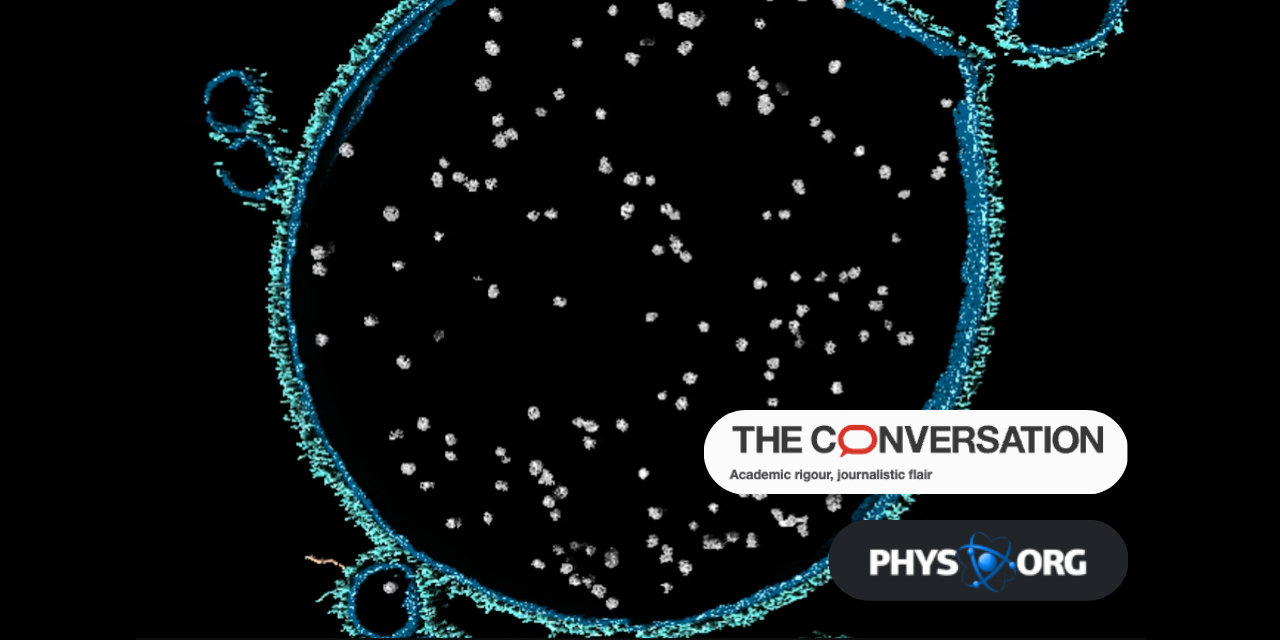
As part of the research, experts collected samples from microbial mats in Shark Bay and isolated a member of the Asgard archaea – a group of microbes thought to be closely related to the ancestors of eukaryotes, which are the cells that make up all plants and animals, including humans.
Assoc Prof Ghosal’s team, including research fellow and co-first author Dr Matthew Johnson, co-led the research and provided the first visual picture of how the complex cell might have evolved through interactions that gave rise to mitochondria – the powerhouse of cells.
“This discovery brings us a few steps closer towards understanding how complex cells evolved from relatively simpler microbial life forms,” Associate Professor Ghosal said.
Shark Bay has a rich Indigenous history and the newly discovered archaeon was named in consultation with Indigenous language experts. Nerearchaeum marumarumayae combines the name of the ancient Greek sea god Nereus and the Malgana word marumarumayae, meaning “ancient home”.
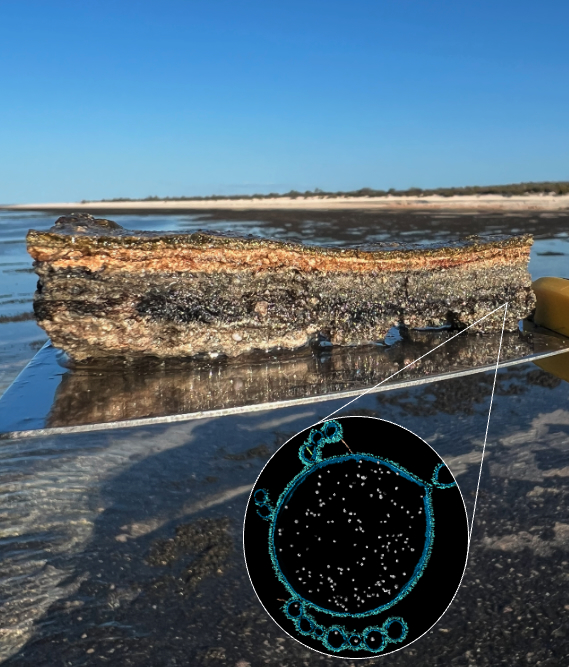
Images: Iain Duggin, Debnath Ghosal, Brendan Burns