Researchers have discovered how cells on the borders of the brain evolved ... twice
Brain tumours have ways of evading treatment – unlocking the secrets of the blood-brain barrier could help target them.
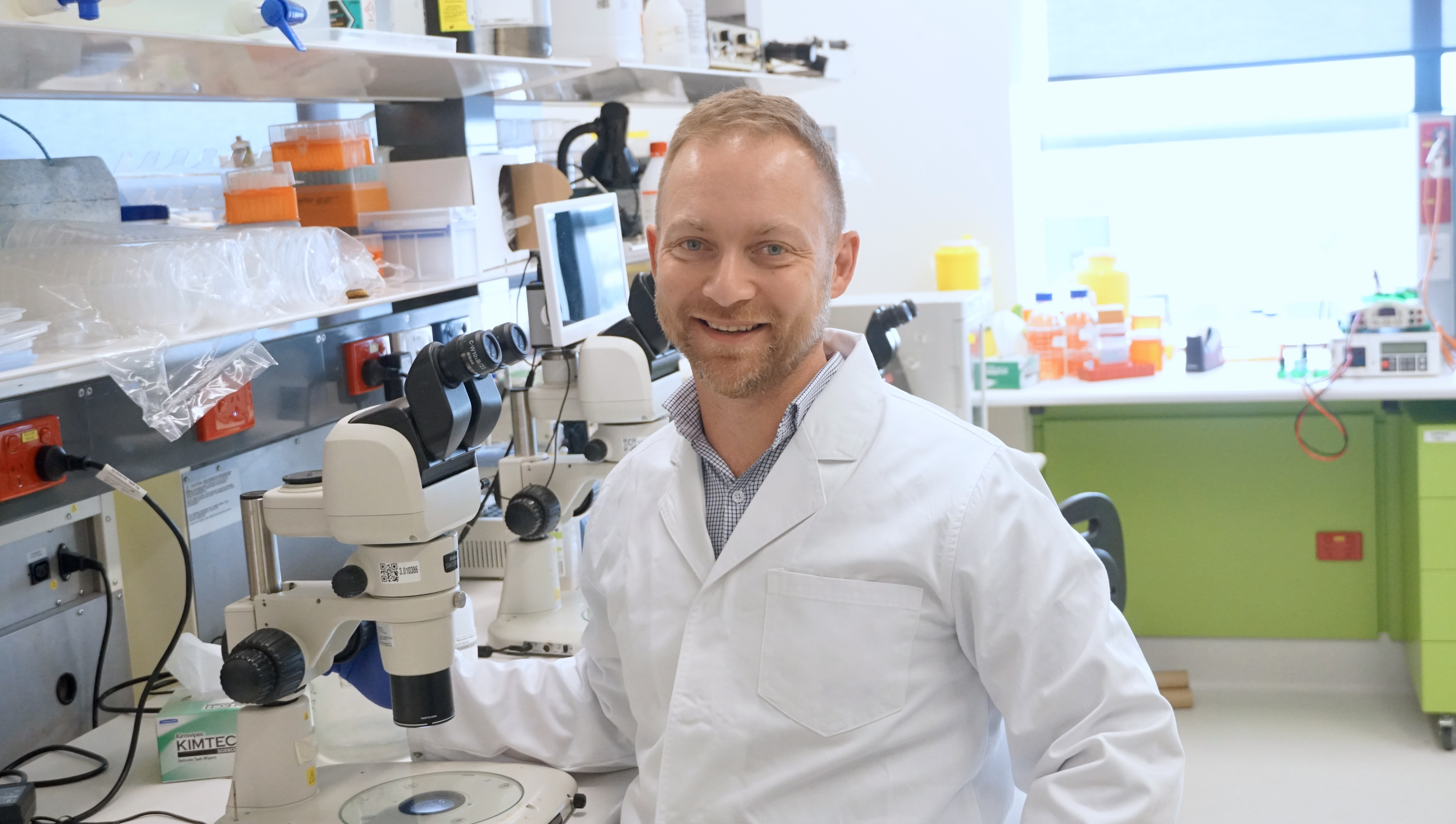
Researchers from the University of Melbourne’s School of Biomedical Sciences, located at Peter Mac, are tracing the evolution of the brain’s protective barrier in a bid to improve treatments for cancer and neurological disease.
Professor Ben Hogan (Department of Anatomy and Physiology) investigates lymphatic vasculature and the blood brain barrier, which play important roles in cancer metastasis and blood disease.
In a study published in Nature earlier this year, a team led by Professor Hogan revealed new discoveries about how a highly specialised group of cells that operate at the borders of the brain evolved.
Brain tumours and brain metastases can evade immunotherapy and anti-cancer drugs by hiding behind protective barriers and manipulating their local environment.
“We aim to deeply understand how brain barriers form, how they evolved and how they function. This will help us to find innovative ways to manipulate them for therapeutic gain in the future,” Professor Hogan told Peter Mac..
The brain is separated from the rest of the immune system by the blood-brain barrier and meningeal membranes. It makes use of specialised immune cells to clear waste, monitor damage and maintain a healthy tissue environment.
By studying zebrafish, sharks, amphibians, chickens, marsupials and mice, the collaborative team – including researchers from Australian Regenerative Medicine Institute at Monash University, University of Queensland and the Cardiovascular Research Institute (Weill Cornell Medicine, New York) – discovered that the cells patrolling brain borders have evolved twice.
The other vertebrates analysed in the study use a type of lymphatic cell for waste clean-up and surveillance. But a separate evolution means it is blood cells that do the same job in humans and other mammals.
“It shows the lymphatic vascular system is far more flexible and powerful than we previously appreciated,” Professor Hogan said. “Excitingly, it suggests that we might one day be able to harness the immune-like potential of lymphatics to treat disease.”