Professor Christine Wells awarded the Lorne Genome 2026 Julian Wells medal
The award recognises outstanding contribution to how we understand the organisation and expression of the genome.
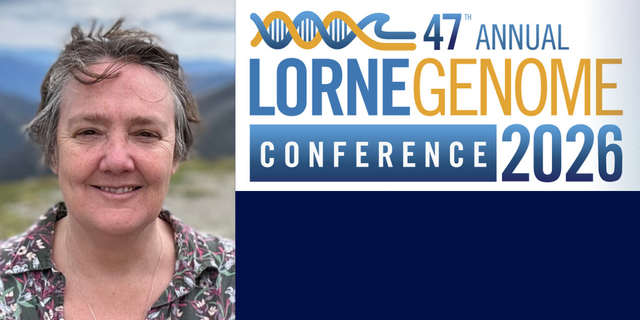
The School of Biomedical Sciences congratulates Professor Christine Wells (Department of Anatomy and Physiology) on being awarded the 2026 Julian Wells medal at the 47th Lorne Genome conference.
The bronze medallion – established in recognition of the major contributions made by Julian Wells to the development of molecular biology in Australia – recognises scientists who are actively involved in developing our understanding of the organisation and expression of the genome.
I’m thrilled to have been recognised in this way. I share the award with 28 eminent Australian scientists, and it’s humbling to be part of that group.
As a Professor of Stem Cell Systems, Christine’s work is aimed at understanding how immune cells support repair of our tissues and organs. Her laboratory develops computational approaches to model the macrophage, one type of immune cell that supports healthy ageing, tissue turnover and tissue repair. Her team recently discovered a new class of the growth factor Neuregulin 1: NRG1-VII.
“The award recognises two aspects of my career,” she said.
“Scientifically, my team has discovered new genes involved in immune regulation of tissue repair. We are working out how immune cells support our health, not just by fighting bacteria, but also by providing cues for tissue repair. This helps us understand how organs like our skin, gut and lungs renew as we age. The prize also recognises the community-building that I’ve done throughout my career. This includes building digital platforms like stemformatics.org to support nonspecialists engage with genomic data, but also mentorship of Australian researchers as they build their own careers.”
Professor Wells leads the Stemformatics Atlas Team, who have developed ways to combine hundreds of datasets into atlases, producing easy-to-use resources to help researchers compare their lab-grown immune cells – iPSC-derived macrophage or dendritic cells – with those found in actual human tissue. These resources are freely available on Stemformatics, a data-sharing platform the team launched in 2011 with the support of the ARC SRI Stem Cells Australia.