Human bacterial pathogens research among NHMRC's Ten of the Best
Research from leading pathogen genomics expert, Prof Ben Howden (DMI), has been selected for NHMRC's Ten of the Best Research Projects (Fifteenth Edition).
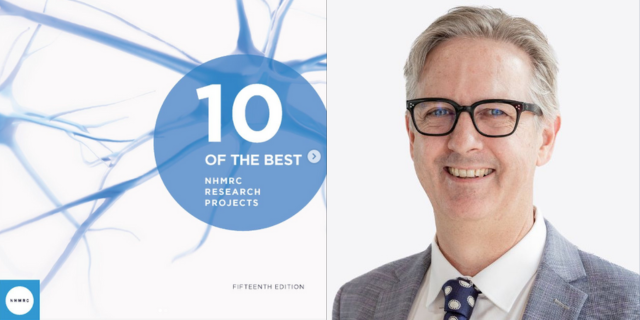
Professor Ben Howden, Head of the Howden Laboratory (Dept of Microbiology and Immunology at the Doherty Institute) has been recognised in NHMRC's flagship publication, Ten of the Best Research Projects (Fifteenth Edition), specifically for his NHMRC-funded research project looking at improving prevention, tracking and treatment of major human bacterial pathogens.
Under Professor Howden’s leadership, pathogen genomics has shifted from a research tool to a vital component of public health practice in Australia, significantly bolstering the nation's preparedness for health crises, such as infectious disease outbreaks.
Professor Howden, who is also Director of the Microbiological Diagnostic Unit Public Health Laboratory (MDU PHL) at the Dohety Institute, said having a solid foundation in genomics research allowed them to lead the charge in COVID-19 genomics for Victoria and Australia, as they were ready to go.
We’ve really revolutionised the use of pathogen genomic technologies in Australia now. We’ve helped government agencies build national systems for integrating genomic data from all the public health laboratories around the country to better spot and understand outbreaks for key public health pathogens, including COVID-19.
“The result is that we had one of the best responses to COVID-19, from a genomic point of view, in the world.”
Professor Howden's pioneering research stands out for advancing our understanding of human bacterial pathogens and developing strategies for their prevention, tracking and treatment using genomic technologies.
One of the world’s major human health concerns is antimicrobial resistance (AMR), an area where Professor Howden’s work is making a big impact.
"We're seeing significantly increased antibiotic resistance around the world and in Australia. Genomic technologies allow us to deeply understand how bacteria are becoming resistant to antibiotics and how those resistant bacteria are spreading, for example, in hospital settings," explained Professor Howden.
His contributions extend beyond national borders, shaping global public health surveillance and response strategies. Professor Howden is one of the key experts of the University of Melbourne Centre for Pathogen Genomics at the Doherty Institute, an academic and training hub established to support collaboration in translational research, genomics-informed infectious disease surveillance, and capacity building across the Asia-Pacific region.
“We’re taking that next step of working internationally to foster relationships with other labs in the public health environment to implement genomic technologies and understand how we use it in a meaningful and cost-effective way,” said Professor Howden.
The NHMRC's "Ten of the Best – Fifteenth Edition" celebrates the groundbreaking work of researchers and their teams across Australia. To learn more about the top research projects, including Professor Howden's pioneering work, visit the NHMRC website.
This article was originally published by the Doherty Institute on 28 March 2024.
The Peter Doherty Institute for Infection & Immunity (Doherty Institute) is a joint venture between The University of Melbourne and The Royal Melbourne Hospital.