Meet Dr Hui-Fern Koay
"A career in scientific research is a privilege…but it has not necessarily become easier from watching those before us."
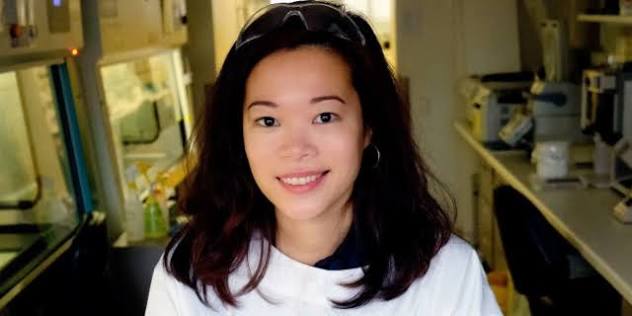
Image: Dr Hui-Fern Koay
Based within the Parkville Precinct, the newly established Koay Lab is looking at unconventional T cells, and how they contribute to immunity, inflammation and cancer.
These particular immune cells include MAIT, NKT and γδ T cellsthat behave a bit differently from conventional T cells and can recognise infection, tissue stress and disease in ways that may be broadly shared across people.
“We are interested in how these cells develop, how they work in tissues, and how they contribute to immunity, inflammation and cancer. Many of our projects sit at the interface of fundamental immunology and translational science and are shaped through collaborations that bring different expertise to the same question” says Dr Fern Koay, Research Group Leader of the Koay Lab.
A major goal of this research group is to understand whether the unique biology of these T cells can be harnessed for new immunotherapies, particularly for solid cancers where better immune approaches are still urgently needed.
For Fern, the journey to establishing her own research group was a steady progression driven by curiosity. Fern says as a student she was an observant person, with a tendency to retain patterns and details.
I enjoyed asking questions where no one quite knew the answer yet, then connecting patterns and building the tools and logic to get closer to the biology.
During her doctoral work, Fern developed a fascination with MAIT cells which are relatively poorly understood.
It felt like there was a whole part of the immune system hiding in plain sight, which was very hard to walk away from…and I like that research gives a sense of progression: asking, learning or noticing something new, and moving a problem forward almost every day.
One of the most significant achievements for Fern is to have contributed to the unconventional T-cell field as it has grown, the understanding of how these cells develop and function and to work that is now contributing to textbook knowledge in immunology.
On a more personal level, being the first-gen PhD in my family, and now having the opportunity to build an independent lab, is something I am very grateful for.
Recently, it’s the research team itself: the students and researchers who bring energy, ideas and care about the work they are doing together. The next phase for Fern is to keep growing this environment, strengthening collaborations and advancing the pipeline from discovery to therapeutic application. Ultimately testing ways to target unconventional T cells for clinical use.
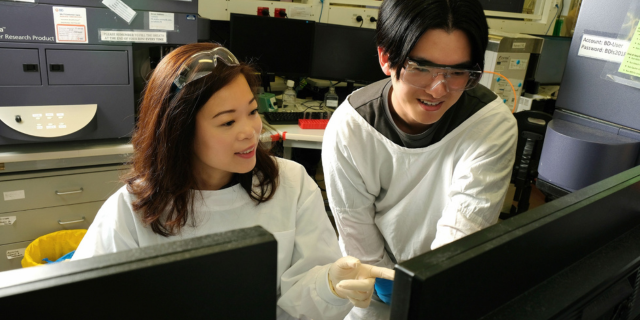
Image: Dr Hui-Fern Koay & colleague
The University of Melbourne and the broader Parkville Precinct provide an exceptional ecosystem for the Koay Lab’s work. With close links to institutes such as Peter MacCallum Cancer Centre, WEHI and leading hospitals, the research group benefits from immediate access to clinical expertise, advanced technologies and translational pathways. This proximity allows fundamental biological questions to be rapidly connected to real-world disease applications.
Outside the lab, Fern says strong relationships, both professional and personal, play a key role in finding balance, alongside simple pleasures like good food, creative cocktail-making and time with friends and family. She says a sense of humour also helps navigate the inevitable highs and lows of research.
A career in scientific research is a privilege…but it has not necessarily become easier from watching those before us. Work thoughtfully: choose good questions, find good people, ask for help sooner, and do not confuse independence with having to do everything alone. The mentors, students, colleagues, collaborators and friends around you shape both the work and the life you build around it.