Stem Cell Disease Modelling Laboratory
-
Associate Professor Maria Di BiaseJoint Head of Laboratorymaria.dibiase@unimelb.edu.au +61 3 9035 3404
Project Details
Our laboratory focuses on the study of human pluripotent stem cells for modelling neurodegenerative and neurodevelopmental conditions.
Stream - NeuroStem Psychiatry
Lead - Associate Professor Maria D Biase
View Associate Professor Di Biase's latest publications listing here
We generate stem cells from adult human tissue, specifically induced pluripotent stem cells (iPSCs), to overcome some of the obstacles in studying human brain development. Utilising iPSCs, we aim to refine and advance models of neural connectivity in vitro and uncover the molecular and cellular foundations of healthy development and major psychiatric illnesses. Our research incorporates neuroimaging observations of the living human brain and brings together a diverse team with expertise in neuroscience, psychiatry, neuroimaging, and computer science. Our ultimate goal is to translate the knowledge gained from these studies into improved therapies for psychiatric illnesses.
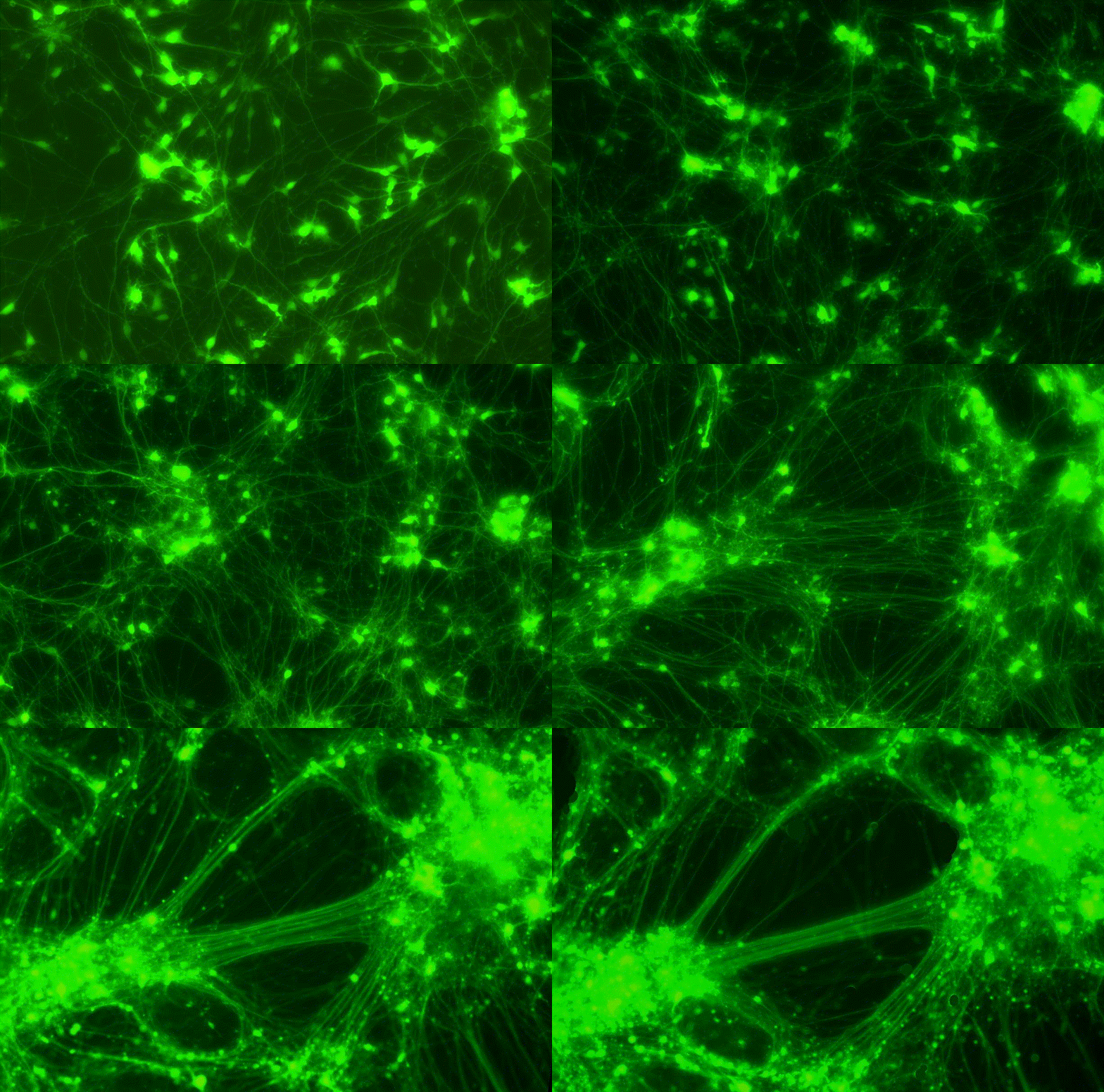
2D and 3D stem cell–derived brain models used to investigate mechanisms underlying psychiatric illness. Videos by Cassandra Hoffman (PhD Candidate) and Jordan Clarke (PhD Candidate).
Stream - Modelling conditions of the retina and optic nerve
Lead - Professor Alice Pébay
View Professor Pébay's latest publications listing here
The difficulty in obtaining brain or ocular tissue from living people is a major barrier to developing new treatments for neurodegenerative disease. We can now generate stem cells from adult tissue, and these “induced pluripotent stem cells” (iPSCs) represent a powerful disease modelling tool. Generating iPSCs directly from patients allows cells to be differentiated into specific cells of interest for disease modelling, drug screening, and understanding of fundamental pathogenic mechanisms.
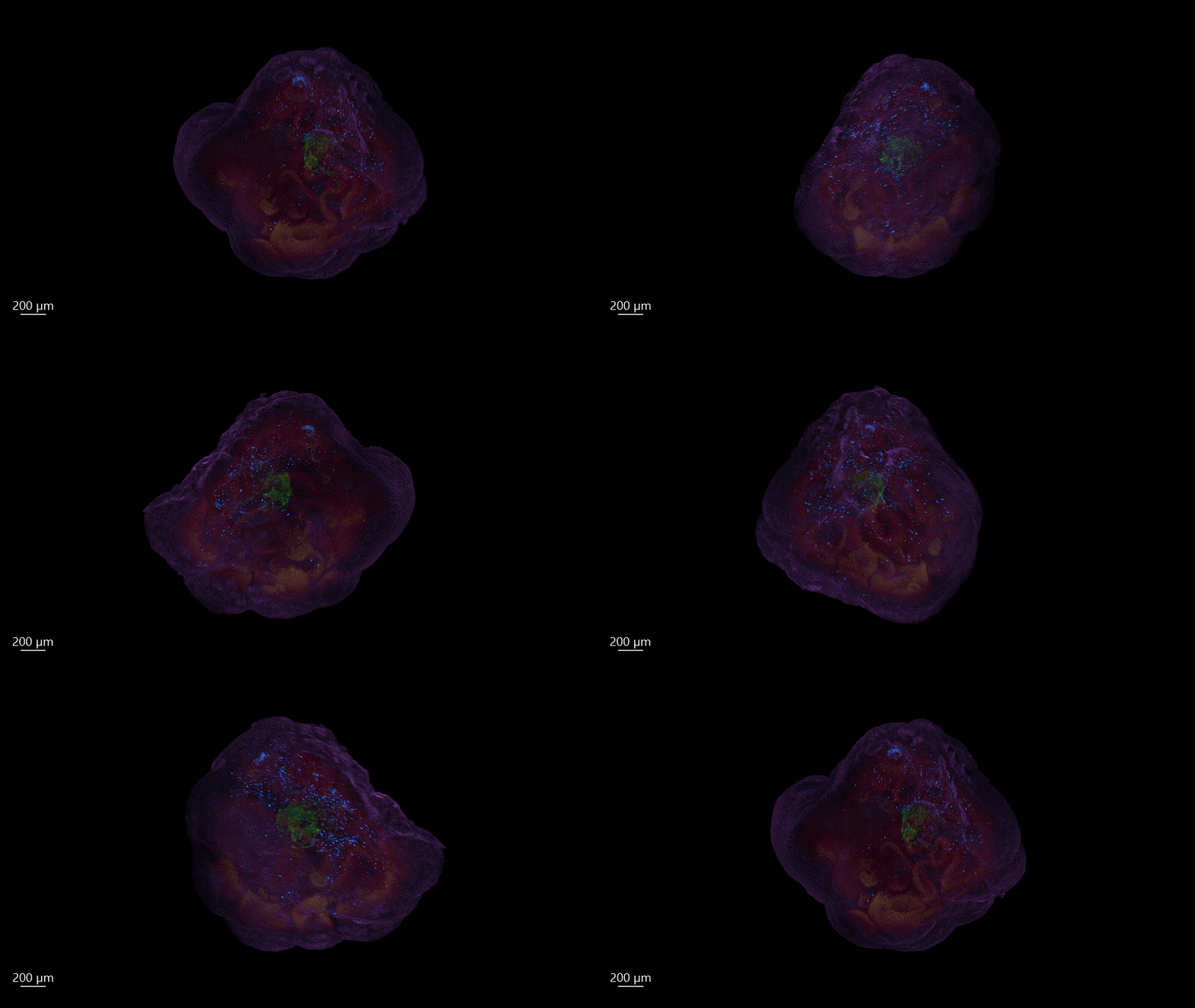
We differentiate iPSCs into various cell types of the nervous system, as monolayers or as organoids. Using these cells, we model age-related macular degeneration, glaucoma, inherited retinal dystrophies and optic neuropathies, in order to establish the molecular events leading to disease progression and aspects of neurodegeneration.
Service Node - Phenomics Australia
Phenomics Australia is a forward-thinking research infrastructure provider enabling research discovery and high-impact healthcare outcomes in precision medicine. Through openly accessible service delivery centres, we offer specialised infrastructure, research services and technical expertise dedicated to advancing our fundamental understanding of health and disease, and enabling next-generation innovations in healthcare and therapeutic development to benefit all Australians. We are supported by the Australian Government through the National Collaborative Research Infrastructure Strategy, (NCRIS). NCRIS supports Australia’s research capability by investing in research infrastructure and making it accessible to researchers across the nation.
Services: Phenomics Australia provides a broad panel of in vivo and in vitro genome engineering and disease modelling, functional genomics and high-throughput screening, biobanking and pathology services and technical expertise, for discovery and a new understanding of the molecular basis of disease to benefit all Australians. More information about Phenomics Australia services can be found here.
As a service node of Phenomics Australia, we provide on-demand reprogramming of patient samples into iPSCs, their quality control and banking, focusing on the production of large-scale iPSC cohort. We can reprogram from various primary cell types, and with different reprogramming approaches. Our service also includes training of researchers in these procedures.
Please contact our node manager Dr Maciej Daniszewski for further information. maciej.daniszewski@unimelb.edu.au
Researchers
Professor Alice Pébay, Research Project Leader & Joint Head of Laboratory
Associate Professor Maria Di Biase, Research Project Leader & Joint Head of Laboratory
Dr Maciej Daniszewski, Research Fellow
Dr Jessica Ma, Research Fellow
Ms Lerna Jurdukian, Senior Research Support Officer
Cassandra Hoffman, PhD Candidate
Jordan Clarke, PhD Candidate
Manveer Chauhan, PhD Candidate
Dan Le Nguyen Ling, PhD Candidate
Collaborators
Prof Alex Hewitt, University of Tasmania & Centre for Eye Research Australia
Prof Robyn Guymer, Centre for Eye Research Australia
A/Prof Joseph Powell, Garvan Institute of Medical Research, Australia
Prof. Martha Shenton, Harvard Medical School, USA
Dr. Simon Maksour, University of Wollongong, Australia
Dr. William Reay and Prof. Murray Cairns, University of Newcastle, Australia
Prof. Naomi Wray, Queensland Brain Institute, Australia
Funding
National Health & Medical Research Council
Medical Research Future Fund
The Rebecca L. Cooper Medical Foundation