What the Goldilocks and the Three Bears fairy tale can teach us about Malaria
Associate Professor Ashraful Haque, Department of Microbiology and Immunology has senior authored a new study revealing critical insights into the role of CD4+ T cells in the immune response to malaria infection and re-infection.
Malaria places a heavy mortality burden on the global population, in 2022 alone, the rampant disease was responsible for over 600,00 deaths in 85 countries; disproportionately affecting certain populations with 95% of these deaths occurring in African regions and 80% of the fatalities reported in children under five.
 Image: A/Prof Ashraful Haque and his team
A/Prof Ashraful Haque and his team have unveiled critical insights into the body’s immune response to malaria in a research published in Nature Communications. Particularly focusing on the behaviour of CD4+ T cells during malaria infection and re-infection; an aspect largely unknown.
Leveraging single-cell and spatial transcriptomics, along with advanced machine learning methods, the research studied the spleen—a vital organ in the immune response.
Spatial transcriptomics, also known as tissue genomics, allows cells to be mapped within body tissue in great detail. The study revealed that even before re-infection, CD4+ T cells occupied distinct areas in the spleen.
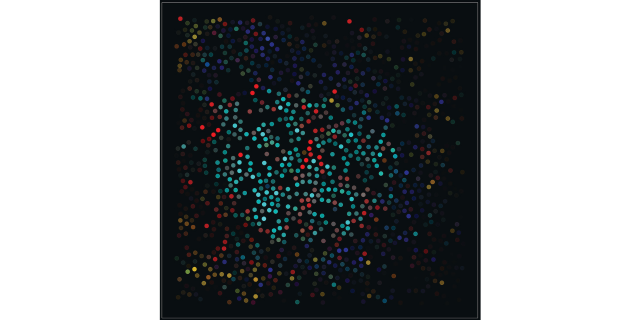
Image: exmaination of germinal centre T follicular helper cells by Spatial Transcriptomics
A/Prof Haque, senior author of the study explains how some CD4+ T cells responded quickly during re-infection, while others kept dormant.
Our approach revealed a ‘Goldilocks and The Three Bears’ phenomenon, in which T cells that had responded really well during the first infection then made either a big, medium or no response during the second infection
“This previously unknown diversity in the immune response provides valuable insights into how children, who frequently experience multiple severe malaria infections within short time frames, may react during these periods.”
The study highlights the dynamic nature and complexity of the body’s immune response to malaria. Whereas some CD4+ T cells retained memory of previous malaria infections and reacted swiftly to the threat of re-infection, eliciting a response similar to the first infection response; and others perceived malaria infection as benign and continued to focus on antibody production within the body.
“We think the immune system is intelligent enough to protect immune cells during re-infection, allowing them to continue instructing the body’s antibody factory, otherwise known as B cells, to make antibodies,” sad A/Prof Haque.
Using the same cutting-edge technologies, the same researcher has a study published inCell Reports, detailing the incredible insights the same cutting-edge technologies can provide – the ability to locate immune cells in tissues while providing a glimpse into the sophisticated interactions between these cells.
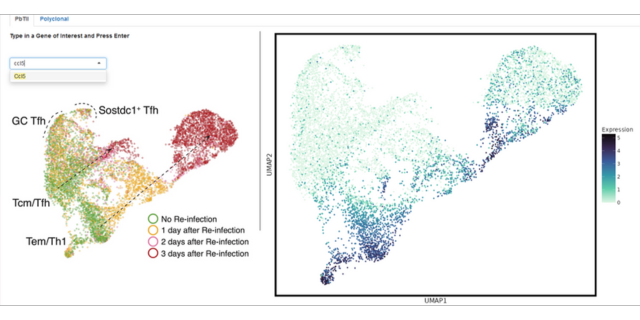
Image: interface used by A/Prof Haque's team to map genes during malaria re-infection
"We believe that spatial transcriptomics, or tissue genomics, not only offers hope for a better understanding of malaria but also has the potential to revolutionise how we approach the diagnosis and treatment of any disease that affects human tissue, ultimately saving lives and improving health outcomes for children and adults worldwide," A/Prof Haque emphasised.
Research by A/Prof Haque and his team delves deeper into the intricate pathways and cellular interactions that predict the behaviour of CD4+ T cells when exposed to malaria parasites.
These crucial insights may lead to future interventions to combat this dangerous disease. In hopes of reducing the mortality our most vulnerable populations and those most susceptible to multiple infections.
This article was originally published on 1 July 2024 by the Peter Doherty Institute for Infection & Immunity (Doherty Institute).