Understanding what happens after a head injury
Researchers are investigating what happens in the critical hours after a traumatic brain injury and whether detecting inflammation early could help prevent lasting brain damage, as featured in the latest Health Desk episode.
When someone experiences an impact to the head, the immediate injury is only part of what happens inside the brain. In the hours following an impact, or after repeated impacts to the head, the brain’s immune response can trigger inflammation. Understanding this response and identifying when inflammation shifts from protective to potentially damaging, could open new possibilities for treating traumatic brain injury (TBI).
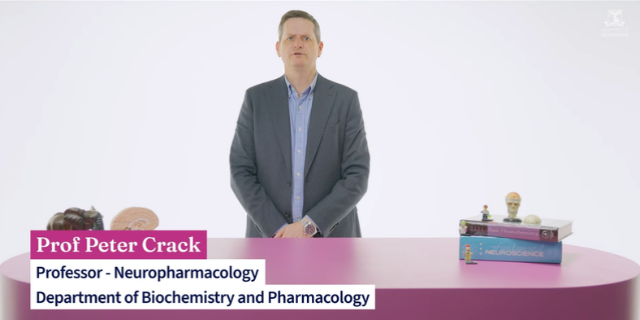
Professor Peter Crack, Head of the Neuropharmacology Laboratory (DBP) in the School of Biomedical Sciences, is one of the researchers investigating this.
An impact to the head is only half the story. The other half is the inflammation that builds in the hours after the impact or repeated impacts to the head.
The window following an injury is a major focus for researchers because it may offer an opportunity for future treatments to change outcomes for people with TBI.
In the latest ‘Health Desk’ episode, The Long-Term Effects of Head Injuries, Explained, Professor Crack and Senior Research Fellow Dr Bao Nguyen join host Associate Professor Karen Lamb to unpack what happens inside the brain following a head injury.
They explore the brain’s immune response, the effects of repeated head impacts and research aiming to identify potentially dangerous inflammation before it leads to permanent damage.
This new episode features ‘RAPID-TBI’ - research investigating traumatic brain injury and the biological processes that occur following an impact. The work forms part of the University’s Curing Chronic Disease Impact Area, which brings researchers together to tackle complex and long-term health challenges.
Watch The Long-Term Effects of Head Injuries, Explained to hear Professor Peter Crack and Dr Bao Nguyen explain:
- what happens in the brain following a head injury
- why the hours after an impact matter
- how repeated impacts can affect the brain
- the role of the brain’s immune system
- how research aims to identify dangerous inflammation earlier
- habits that can help support brain health
Explore the Curing Chronic Disease Impact Area
‘Health Desk’ is a Faculty of Medicine, Dentistry and Health Sciences explainer video series that brings medical research from the University of Melbourne to a broad audience through accessible, longer-form digital stories.
Please note, the Health Desk video is for general educational and informational purposes only and is not a substitute for professional medical advice, diagnosis or treatment. Always seek the advice of a qualified health provider with any questions you may have regarding a head injury or your brain health.
With thanks to the R.D. Wright Lecture Fund for sponsoring this video, and to the Impact Areas Research Initiative for supporting this program.