Social Video: Australia’s First AI-Designed Protein Targets Drug-Resistant Superbugs
Dr Rhys Grinter (DBP) and his team have designed a protein using artificial intelligence (AI) to combat drug-resistant E. coli - a major threat in the growing global antibiotic resistance crisis.
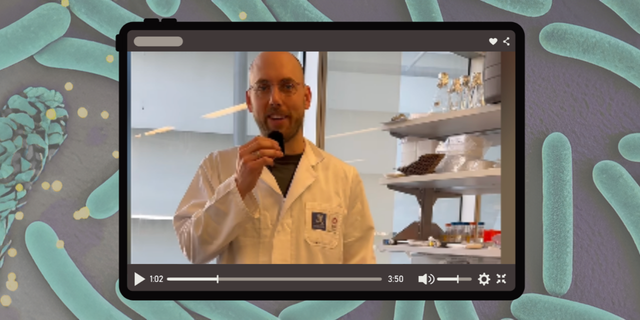
You may have read about this groundbreaking research in Pursuit - now you can see it brought to life in our latest social video. It’s already sparking interest across the University and Faculty platforms with a total of 38,631 views across TikTok, Instagram, Facebook & LinkedIn, 1,121 engagements and has reached 29,446 users on Facebook + LinkedIn combined.
Led by Dr Rhys Grinter, NHMRC Investigator and Grimwade Research Fellow at the Department of Biochemistry and Pharmacology, the team set out to answer a bold question: Can AI help us create a protein to block bacteria that no longer respond to antibiotics?
One of the reasons for this study was to prove how effective this technology is so that we can apply it to other diseases. AI protein design could be used to create medicines to treat almost any disease you could think of, from a pandemic virus, to cancer, obesity and heart disease. As the technology matures, I really believe it will transform how we develop new medicines to treat disease.
Dr Rhys Grinter
Watch now:
- TikTok (UniMelb)
- Instagram (UniMelb + MDHS)
- Facebook (UniMelb + MDHS)
- LinkedIn (UniMelb)
- LinkedIn (MDHS)
How it works: AI meets molecular biology
Much like how AI tools such as ‘Dali-E’ or ‘Midjourney’ generate images from text prompts, the AI used in this study imagines thousands of protein structures based on specific instructions. But instead of pixels, it designs real chemical molecules.
Once the AI generated potential protein designs, researchers built them in the lab and they worked; these proteins effectively stopped E. coli from growing.
What makes this protein unique?
Unlike existing antibiotics, this AI-designed protein has a completely novel shape and chemistry. The AI was trained on decades of protein data, allowing it to generate blueprints for molecules that have never existed before.
Why AI is essential
Creating such a protein without AI would be impossible. The technology enables scientists to design molecules with specific functions, such as targeting drug-resistant bacteria. This approach is faster, cheaper and more precise than traditional drug development.
What’s next?
The current proteins are prototypes. Rhys says he and his team are now refining their designs and testing for safety and stability. If successful, this could pave the way for AI-designed medicines to treat a wide range of diseases - from cancer to heart disease.
Antibiotics revolutionised medicine, turning once-deadly infections into treatable conditions. But overuse has led to resistance, making some infections untreatable. This new AI-driven method could be a game-changer in developing next-generation treatments.