School of Biomedical Sciences' researchers awarded $22m in NHMRC Investigator Grants
Congratulations to our 17 researchers who received highly competitive National Health and Medical Research Council (NHMRC) Investigator Grants to support ambitious research programs.
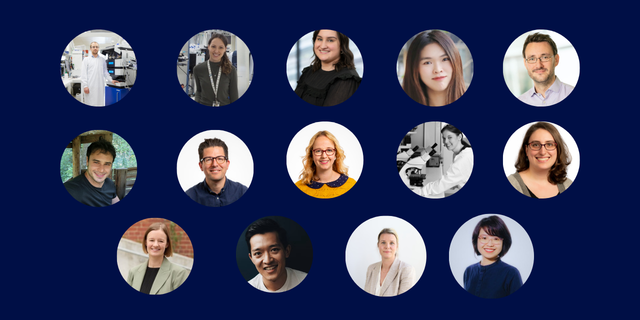
The National Health and Medical Research Council (NHMRC) Investigator Grant scheme supports outstanding health and medical researchers at all career stages, helping to drive innovative discoveries that improve health outcomes for Australians and communities worldwide.
This year's success reflects the strength, depth and impact of research across the School of Biomedical Sciences. The funding will enable our researchers to continue addressing some of the most significant challenges in human health and disease.
Professor Jennifer Wilkinson Berka said the grants recognise both the expertise of the recipients and the collaborative research culture within the School.
These awards are a testament to the outstanding calibre of our researchers and the important contributions they make to advancing human health. We are delighted to see their achievements recognised through this highly competitive national funding scheme and look forward to the impact their research will continue to deliver.
Dept of Anatomy and Physiology
- Yiyuan Han (Arriving from Harvard to join the Ivanusic Lab) | Harnessing Nanotechnology to Develop Next-Generation Skeletal Pain Relief
- A/Prof Benjamin Parker | Targeting the skeletal muscle proteome to improve health
Dept of Biochemistry and Pharmacology
- Dr Daniella Hock | Closing a Rare Gap: Translating proteomics into a pathology test for rare disease diagnosis
- Dr Bronte Johnstone | Uncovering HTLV-1 host-cell entry and cell+cell transmission at near-atomic resolution
- Dr Yilin Kang | Unravelling the Impact of External Stressors on Mitochondrial Disease
- A/Prof Michael Menden| ARTEMIS: Artificial intelligence for Response prediction and Translational Engineering in Medicine using Integrated Systems
Dept of Microbiology and Immunology
- Dr Thomas Burn | Uncoupling Tissue-Resident Memory T cells and Exhausted T cells in tumour
- Dr Andrew Buultjens | Advanced machine learning to understand the emergence and spread of bacterial pathogens
- Stefano Giulieri | Advancing outcomes of Staphylococcus aureus infections through genomics-based precision medicine
- Dr Claire Gorrie | Microbial genomics for management of antimicrobial resistance in hospitals
- Dr Jennifer Habel | Harnessing immunity in pregnancy, infancy & childhood to protect from severe viral diseases
- A/Prof Jennifer Juno | Harnessing CD4 T cell responses for antiviral immunity
- Dr Genevieve Martin | Targeting antiviral immunity to prevent morbidity and mortality from severe viral infections
- Dr Hyon Xhi Tan | Decoding and exploiting immune dynamics to maximise vaccine-induced protection
- A/Prof Sophie Valkenburg | Determining optimal immunity to respiratory viruses
- Dr Mai Ngoc Vu | Drive improvements of nanoparticle vaccines and therapeutics for infectious diseases
- Dr Huimeng Wang | Hamessing MAIT cells, an innate-like subset of T cells, for the treatment of skin infections
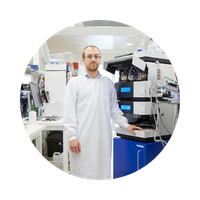
| A/Prof Ben ParkerResearch Group Leader | Anatomy & Physiology Targeting the skeletal muscle proteome to improve health Poor muscle function is the single biggest contributor to the Australian economic healthcare burden, underlying metabolic disease, sarcopenia, muscular dystrophies, cancer cachexia, and motor neurone disease (MND). This grant will develop novel proteomics methods to uncover the molecular mechanisms driving skeletal muscle disorders and to. |
Proteomics in Australia is what Nashville is to country music, what New Orleans is to Jazz, what London is to punk, and what Detroit is to Techno. We are in an incredible position and this amazing technology is transforming our ability to deconvolute the complex orchestra of our cells to discover new disease mechanisms and therapeutic targets.
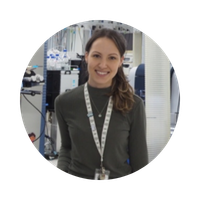
| Dr Daniella HockResearch Fellow | Dept Biochemistry & Pharmacology Closing a Rare Gap: Translating proteomics into a pathology test for rare disease diagnosis Only half of individuals with a rare disease receive a genetic diagnosis despite extensive clinical testing and my project will demonstrate the utility of rapid untargeted proteomics in increasing and speeding up the diagnosis of rare diseases. |
This Investigator Grant will enable me to accelerate the translation of proteomics into a clinical test to improve the diagnosis of rare diseases, allowing patients and families to access appropriate care and reproductive options sooner.

| Dr Bronte JohnstoneResearch Fellow | Dept Biochemistry & Pharmacology Uncovering HTLV-1 host-cell entry and cell+cell transmission at near-atomic resolution This research will investigate the structural mechanisms of how the human retrovirus HTLV-1, which is highly endemic in Indigenous Australian communities, enters and subsequently spreads throughout our cells using a multiscale structural biology approach. |
This funding provides critical support at a pivotal stage of my career as an ECR, while also funding research that will help address the current lack of vaccines or effective treatments against a virus with a high impact in Australia.
| Dr Yilin KangProfessorial Fellow | Dept Biochemistry & Pharmacology To understand which and how external stressors influence the onset of mitochondrial disease, and to develop proactive, targeted intervention solutions that delay or prevent disease onset With over 120,000 Australians at genetic risk and no cure available, this research aims to uncover why mitochondrial disease varies so widely in onset and progression, to develop targeted interventions that go beyond simply managing symptoms. |

Right now, families living with a mitochondrial disease genetic risk factor face huge uncertainty — we can't tell them when or how the disease might strike, or if it will strike at all. This grant lets me pursue the question of what actually triggers disease onset, so that one day we can offer real answers, and interventions that delay or even prevent the disease before it starts. That's the difference this funding makes — moving us from managing symptoms to genuinely changing outcomes for patients and their families.
| Prof Michael MendenResearch Group Leader | Biochemistry & Pharmacology ARTEMIS: Artificial Intelligence for Response Prediction and Translational Engineering in Medicine using Integrated Systems ARTEMIS will develop artificial intelligence and digital twin technologies that integrate clinical, molecular and experimental data to predict treatment response and enable more personalised therapies in cancer, ALS and other complex diseases. |

This five-year fellowship will enable us to pioneer AI-powered digital twins that predict disease trajectories and identify the best treatments for individual patients. Just as importantly, it will help us train a new generation of hybrid AI-biomedical scientists, positioning Australia at the forefront of precision medicine.
| Stefano GiulieriClinician Researcher | Microbiology & Immunology Advancing outcomes of Staphylococcus aureus infections through genomics-based precision medicine The bacterium golden staph causes life-threatening infections in blood and other organs and is becoming more resistant to antibiotics. My project will study golden staph DNA to link genetics with drug resistance and outcomes, enabling more personalised treatment. |

The grant will allow me to use genomics to unlock the secret weapons that enable golden staph to cause severe infections and escape our best treatments - this will empower us to use genomics in infectious diseases just as it has been successfully applied in cancer medicine.
| Dr Claire GorrieBioinformatician | Microbiology & Immunology Harnessing cutting-edge genomics for surveillance of AMR bacteria, genes, and environments Antimicrobial-resistant (AMR) bacteria are a leading global public health threat, so understanding how they evolve and spread within and between patients and their environments, and developing effective and accurate ways to monitor this, is vital to curbing their impact. |

Being awarded this Emerging Leadership grant provides me with the stability and freedom to explore key questions that I have long wanted to investigate and I am both excited and grateful for this privilege.
| Dr Genevieve MartinInfectious Diseases Physician and Research Fellow | Microbiology & Immunology Targeting antiviral immunity to prevent morbidity and mortality from severe viral infections By studying immune responses to viral infections, I will identify what determines an individual’s outcome (whether they recover or die from viral infection), laying the foundation for targeted strategies to improve health outcomes. |

The Investigator Grant scheme supports researchers in driving innovative, ambitious scientific programmes. I am deeply grateful for this opportunity to expand my research programme, which addresses clinically relevant questions about how the immune system responds to severe viral infections.
| Dr Hyon Xhi TanResearch Officer| Microbiology & Immunology Decoding and exploiting immune dynamics to maximise vaccine-induced protection This research will find optimal ways to give vaccines for stronger, faster protection: when to give doses, how much, where in the body to target them, and which vaccine types work best. |

These strategies will help rapidly protect populations against existing pathogens or during outbreaks.
| A/Prof Sophie ValkenburgResearch Group Leader | Microbiology & Immunology Harnessing Antiviral Immunity to Respiratory viruses by Defining Conserved Viral targets for robust T cell and Antibody functions This proposal optimises use of current vaccines, identifies viral targets for diagnostics, therapies and next generation vaccines to combat influenza and MERS to transform pandemic preparedness. |

This grant solidifies my team and research momentum in the Australian research landscape, to develop vaccines and therapies that focus on conserved functional achilles heel of viruses for more effective long term immunity against influenza and coronaviruses.
| Dr Huimeng WangPostdoctoral Research Fellow | Microbiology & Immunology Hamessing MAIT cells, an innate-like subset of T cells, for the treatment of skin infections My research will investigate MAIT cell responses during skin infections and explore ways to modulate their functions, laying the foundation for MAIT cell-based therapies for a range of skin diseases. |

Receiving this grant will be an important step in building my independent research career. It will allow me to establish a new direction in skin MAIT cell biology and explore the potential of MAIT cells to develop better treatments for skin diseases.