New research unlocks key to long-lasting immune response in cancer and chronic diseases
A discovery about the mechanisms that enable the immune system to sustain long-term protection could revolutionise treatment for chronic disease and cancer.
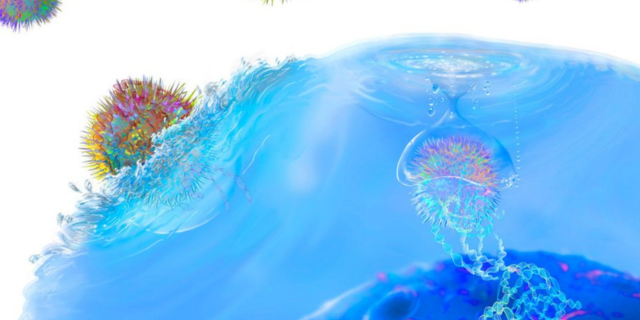
Image: Illustration of CAR T therapy
Prolonged illnesses like cancer and chronic infections often leave the immune system in a state of exhaustion, where its frontline defenders – T cells – lose their ability to function effectively. Research, led by the Peter Doherty Institute for Infection and Immunity (Doherty Institute) and the Peter MacCallum Cancer Centre (Peter Mac), have identified a rare type of immune cells, called stem-like T cells, that holds the key to maintaining powerful, long-term immune responses.
Published in Science Immunology, the study revealed that the endurance of these stem-like T cells is fuelled by a protein called ID3, expressed by a gene of the same name. These ID3+ T cells have a unique ability to self-renew and resist exhaustion, giving them the power to sustain immune responses far longer than other T cells that don’t express ID3.
Catarina Gago da Graça, PhD Candidate (Dept of Microbiology & Immunology at the Doherty Institute) and co-first author, said the research highlights how ID3+ T cells hold the key to overcoming one of the biggest challenges in treating chronic diseases—immune exhaustion.
ID3+ T cells have the remarkable ability to resist burnout and maintain a powerful immune response over time, making them particularly effective in the face of chronic infections or cancer.
The research also found that certain signals in the body could increase the number of ID3+ T cells, paving the way for improved treatments like CAR T cell therapy. While CAR T therapy has been transformative in treating certain cancers, its effectiveness can wane over time due to T cell exhaustion.
Dr Daniel Utzschneider, Laboratory Head in the Dept of Microbiology & Immunology at the Doherty Institute, said the findings could lead to advancements in immunotherapy treatments and the development of vaccines that provide long-lasting protection.
“Exhausted immune cells remain one of the biggest challenges in treating chronic diseases,” said Dr Utzschneider.
This research provides a roadmap for how we might reinvigorate the immune system to improve health outcomes for people living with cancer or chronic infections like HIV or hepatitis B and C, thanks to these stem-like T cells, the immune system’s secret power.
This article was originally published by the Doherty Institute on 1 Feb 2025.
Find out more about Catarina Gago da Graça and Dr Daniel T. Utzschneider's research in Pursuit
The Doherty Institute is a joint venture between The University of Melbourne and The Royal Melbourne Hospital