New computer tool could diagnose chronic fatigue syndrome
Dr Christopher Armstrong (Department of Biochemistry & Pharmacology) features in The Age discussing breakthrough research that could lead to quicker diagnoses of the debilitating condition in the future.

Chronic fatigue syndrome (CFS) affects 250,000 Australians but the cause is unknown. It often takes years to identify with medical practitioners spending months ruling out similar conditions first. And now experts say the figure is rising as some long COVID patients go on to develop CFS.
As reported in The Age on 29th March, Dr Christopher Armstrong and his colleagues have trained a machine learning algorithm to identify CFS and the results, as published in the peer-reviewed Nature journal 'Communications Medicine', found that the machine learning model could accurately predict the existence of CFS 83% of the time.
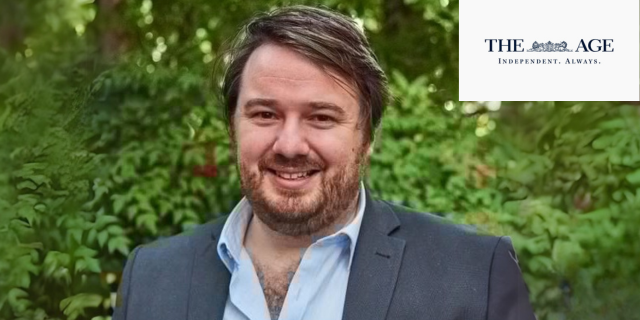
Image: Dr Christopher Armstrong
With some patients waiting up to a decade or more for a diagnosis and three out of four people with the condition are women, CFS is considered a chronic illness with extreme fatigue as the main symptom but can also involve cognitive difficulties, muscle and joint pain, gastrointestinal issues and migraines.
Christopher told The Age he now hopes to take the algorithm from the lab to the doctors office.
The idea is that you could take any blood sample, run it through these machines that created the data, take that readout and put it through this algorithm, and it just reads out immediately where the patients score...It ends up being a percentage chance that they have CFS.
Dr Christopher Armstrong [The Age, 29 March 2025]
This means patients can get on their treatment pathway faster or be informed on how best to manage their disease.
With the research project using biological samples from Britain, the next step is to run the algorithm on Australian data to see if the results are replicated.
“If successful, Australian GPs could be using the tool before the end of the decade…if everything goes well, it could be two years,” Dr Armstrong said.
This article was originally published by The Age on 29 March 2025.
Read original article here (subscription required)
This story was also featured in: