e-Meet a Biomedical Scientist 2026
From the lab to the classroom. In celebration of National Science Week – 17 to 21 August 2026 – high school students will have the opportunity to meet our experts and learn about the world of biomedical sciences.
Meet our researchers
We want to celebrate National Science Week by connecting our University of Melbourne Biomedical Scientists with Victorian high school students.
National Science Week is Australia’s annual celebration of science and technology. It's an initiative that ignites student curiosity, exploration and discovery.
Every year, we present a one-of-a-kind opportunity to talk to one of our passionate biomedical researchers, who are dedicated to solving some of the world’s biggest health challenges.
Biomedical scientists are at the heart of multidisciplinary healthcare teams and their research drives the discovery of new medications, vaccines, treatments and cures for many life-threatening diseases.
In a 20 to 30 minute video call, our experts – many of whom are global leaders in their research field – will help you to inspire the next generation of biomedical scientists.
Students in Years 10 – 12 from across metropolitan, regional and rural schools are invited to ask questions about:
- What it's like to make a major scientific discovery?
- How it feels to change the course of a person’s health – and life?
- What career pathways are available for budding young biomedical scientists?
- What are the latest technologies available in modern-day, cutting-edge science laboratories?
... and much more!
The School of Biomedical Sciences will work to "match-make" our experts with participating secondary school classes in the weeks prior to National Science Week so that meetings ideally can take place during National Science week itself: Monday 17 to Friday 21 August 2026.
Registrations are now closed.
As the largest School of Biomedical Sciences in Australia, we are at the forefront of teaching and research excellence, with the aim of advancing human health.
The field of biomedical sciences is experiencing high growth with many career opportunities. There has been an unprecedented expansion of knowledge, technology and, importantly, collaboration.
Following successful e-Meet a Biomedical Scientist events in previous years, we are excited to be sharing this initiative again. Offering an opportunity for our own biomedical sciences experts to share their knowledge, and for schools to inspire and engage their students in a new way.
We look forward to your participation!
Meet our Biomedical Scientists Joining This Year’s Program!
Meet Our Researchers!
| Meet Ashleigh Hayes"I'm a Research Assistant/Lab Manager and work with bacteria called Staphylococcus aureus (S. aureus), a major human pathogen that's recognised as a significant public health concern worldwide. I study how the bacteria (S. aureus) adapts to its environment during infections and antibiotic treatment. A key goal is to examine significant changes across the global S. aureus population, which have not been well-researched. My findings will help better understand how S. aureus survives and adapts within human infections and how it develops antibiotic resistance." Ashleigh HayesResearch Assistant/Lab Manager, Dept of Microbiology & Immunology |
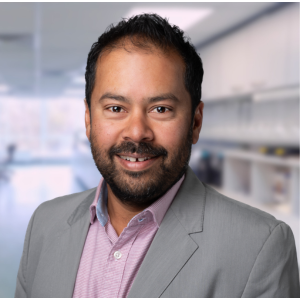
| Meet A/Prof Ashraful Haque"I lead an immunology lab of 10 researchers, trying to establish how we could better protect against malaria." A/Prof Ashraful Haque |
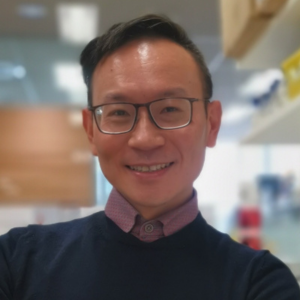
| Meet Dr Brendon Chua"I am passionate about research on how our immune responses fight infections especially against those respiratory viruses. I have been involved in many studies that have not only made significant discoveries but also using what we know to develop better vaccines and therapies to protect against infection." Dr Brendan ChuaSenior Research Fellow, Dept of Microbiology & Immunology |
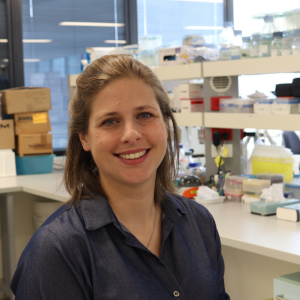
| Meet Dr Carolien van de Sandt"My current research aims to understand why our immune system's ability to respond to viruses declines as we age. By comparing killer T cells (a type of immune cell) from children and elderly individuals, I am looking at the differences in their responses. I found that children's killer T cells are better at recognizing virus-infected cells and have stronger mechanisms to kill them compared to elderly killer T cells. I want to use this knowledge to develop vaccines and treatments that can provide elderly killer T cells with the same capabilities as children's - and protect the elderly from severe infections." Dr Carolien van de SandtResearch Fellow, Dept of Microbiology & Immunology |
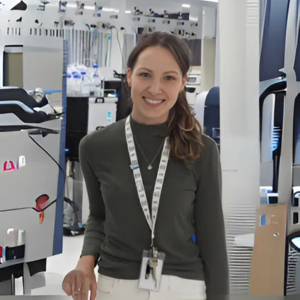 | Meet Dr Daniella Hock"I work on developing a protein analysis test to help diagnose patients with rare genetic diseases. Currently around 50% of patients with a suspected rare disease remain undiagnosed. I'm passionate about human genetics, disease and working in projects that are in the intersection of science and translation." Dr Daniella Hock |

| Meet Dominika Michalek (PhD candidate)"I am a Biochemistry and Molecular Biology Laboratory Demonstrator for the subject Techniques in Molecular Science. I'm also in the second year of my PhD at Peter Mac where I'm studying the molecular mechanisms of cell death and inflammation: how do our cells respond to threats like damage or 'danger' and how do the cells bring about an appropriate response?" Dominika Michalek |
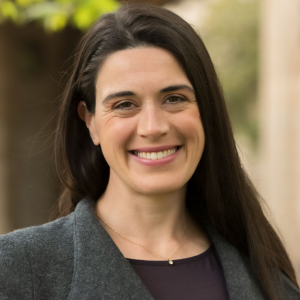
| Meet Dr Kate Hatzopoulos"I'm a Senior Lecturer and subject coordinator of topographical anatomy for our biomedical and science programs. I'm also highly specialised in cadaver dissection and have been the lead dissector for many of the specimens currently on display at the University. I collaborate with researchers, apply my dissection expertise and supervise students involved in these projects." Dr Kate HatzopoulosSenior Lecturer, Dept pf Anatomy & Physiology |
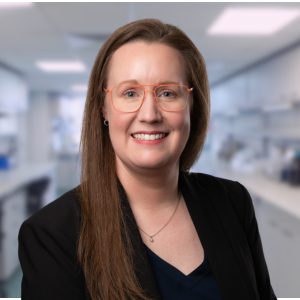
| Meet Dr Louise Rowntree"I work on understanding immune responses to viral infections in high-risk populations including Australian First Nations people, pregnant women, children and people with co-morbidities. These groups are vulnerable to severe respiratory virus infections like influenza and SARS-CoV-2, and we want to understand why and how best to protect them." Dr Louise Rowntree |
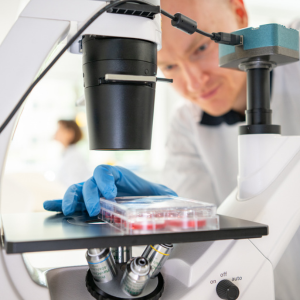
| Meet Dr Maciej Daniszewski"I'm a cell biologist who uses human stem cells to understand why we develop neurodegenerative diseases, such as glaucoma, macular degeneration or ALS. In my work I utilise cutting-edge techniques to analyse cellular transcriptome, epigenome and function as well as automation to increase throughput and improve consistency." Dr Maciej DaniszewskiPostdoctoral Research Fellow, Dept of Anatomy & Physiology |
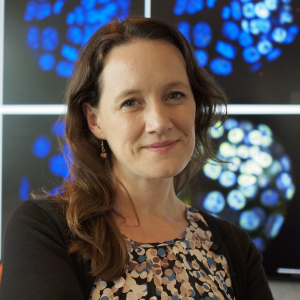
| Meet A/Prof Melanie Eckersley-Maslin"My research group investigates what gives cells their identity and how they adapt to change. We study this in both the context of embryonic development and cancer and use a combination of cellular and molecular biology experimental and computational tools in our research. My role involves teaching and mentoring my team, leading our research questions, training staff and communicating our research findings to other scientists and the broader community." A/Prof Melanie Eckersley-MaslinHead of Laboratory, Dept of Anatomy & Physiology |
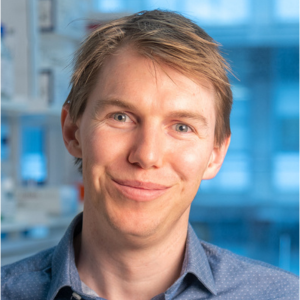
| Meet Dr Mike Clark"I'm a medical researcher and Laboratory Head - our research is in genomics and neuroscience. We investigate how our brain develops and how our genes contribute to who develops mental health disorders like schizophrenia, bipolar disorder and depression." Dr Mike ClarkSenior Research Fellow & Head of Laboratory, Dept of Anatomy & Physiology |
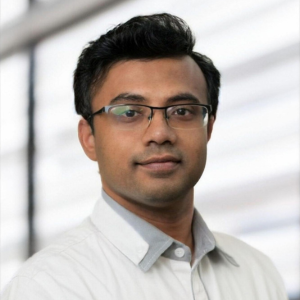 | Meet Dr Naveen Vankadari"My research is at the forefront of understanding the events central to human infection, with a focus on structural and functional studies on viral and bacterial proteins involved in infection that have challenged human immunity." Dr Naveen VankadariResearch Fellow & Lecturer, Dept of Biochemistry & Pharmacology |
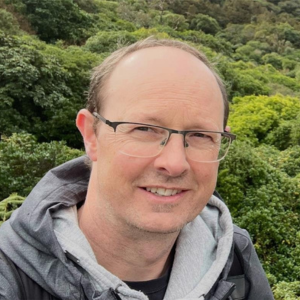
| Meet Prof Paul McMillan"My job is to help the scientists to stain, visualise and quantify the biology that they are investigating (plus we get to make cool movies). The platform is equipped with 25 different advanced light microscopes, each of which can be used for a different type of experiment. Think about your microscopes at school, but much bigger and equipped with lasers and robotics, with systems costing up to $1.5M each!" A/Prof Paul McMillanManager of the Biological Optical Microscopy Platform |
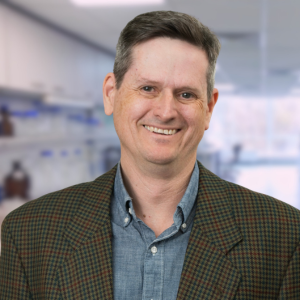
| Meet Prof Peter Crack"My research focuses on neuroinflammation, innate immune signalling, and the development of novel therapies for neurological disorders including traumatic brain injury, Alzheimer's disease, Parkinson's disease and motor neurone disease." Prof Peter Crack |
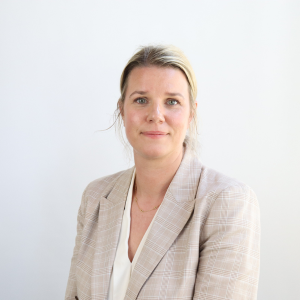
| Meet A/Prof Sophie Valkenburg"I run a research program on the immune responses of influenza and COVID. I lead a dynamic team to drive new experiments, share our results around the world and help the University in research and teaching." A/Prof Sophie Valkenburg |
Here's what our matches are saying:
|
|
Research Fellow, Department of Anatomy & Physiology "Since my high school did not have a science outreach program, I wanted to offer my knowledge, experiences and expertise to inspire high school students … speaking to school students is very rewarding to ask us questions about my work and the university ... It's great to pitch your work to a different audience (high school students are very different to presenting at conferences) which is very fun!” | “[Stacey’s] insights and expertise have truly enriched [the students’] learning experience. [Her] visit has no doubt made a lasting impact on our students and appreciate [her] contribution to our community” – Teacher, Auburn High School |

Learn more here about previous year's eMeet a Biomedical Scientist program and what participants had to say.