Dr WuJi Zhang receives prestigious Chancellor's Prize for Excellence in PhD Thesis
Honorary & Bachelor of Biomedicine alumni, Dr WuJi Zhang (DMI) has been awarded the top honour for his PhD Thesis on human immunity to influenza, SARS-CoV-2 infections and vaccinations.

With his world-first research contributing to ‘closing the gap’ in the health care of Australian First Nations peoples, Dr WuJi Zhang (Dept of Microbiology & Immunology) has been awarded the prestigious Chancellor's Prize for Excellence in PhD Thesis. WuJi's research has garnered international recognition for its innovative approach and significant findings within human immunology studies.
"I am deeply honoured to receive this prestigious award - this recognition not only affirms the value and impact of my research, but also stands as a testament to the unwavering support and mentorship I received throughout my PhD studies," WuJi said.
WuJi’s PhD studies were at the global forefront of research on immunity to influenza and SARS-CoV-2 infections and vaccinations, as evidenced by his world-first knowledge on immune responses to COVID-19 vaccination in First Nations populations.
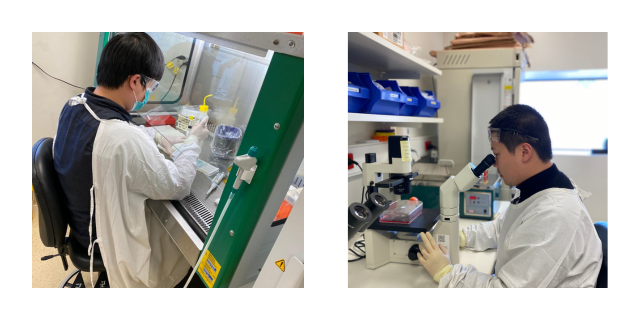
Image: Dr WuJi Zhang in the lab
Co-supervised by Professor Katherine Kedzierska and Dr Thi Hoang Oanh Nguyen in the Department of Microbiology and Immunology, WuJi characterised SARS-CoV-2-specific T-cell responses in First Nations peoples, revealing robust and prototypical T-cell responses in these individuals. This provided insights into optimal T-cell responses in both healthy and high-risk groups and is significant for its global impact at the forefront of research on immunity to SARS-CoV-2.
Importantly, WuJi’s PhD work was published in Nature Immunology (including accompanying Journal Cover with Aboriginal art) and specifically revealed world-first evidence that individuals with co-morbidities had significantly reduced antibody responses, regardless of ethnicity.

Image: Nature Immunology cover art by Zoe Mardijbalina Fitzpatrick
This study showed the vulnerability of Australian First Nations people to SARS-CoV-2 infection, given the high prevalence of chronic medical conditions such as diabetes and renal disease. As Indigenous people globally were not included in COVID-19 vaccine clinical trials, there was an unmet need to understand immune responses to COVID-19 vaccination in First Nations people.
WuJi said the research provided strong evidence that COVID-19 vaccination triggers effective immune responses against the virus in First Nations peoples.
These findings also offer valuable guidance for vaccination strategies in Indigenous populations worldwide.
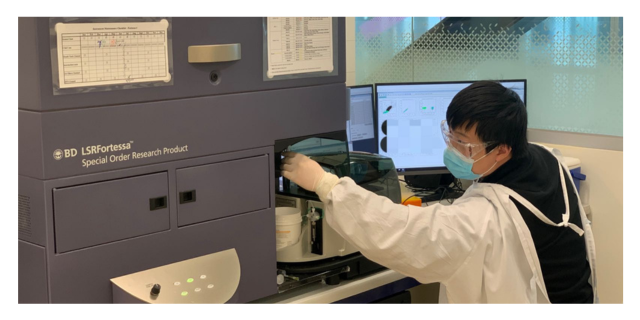
Image: Dr WuJi Zhang in the lab
The international impact of WuJi’s PhD studies is evident from >785 citations across continents, with h-index of 10 across his 16 manuscripts, attesting to the broad and significant impact of his research in the scientific community.
WuJi’s international recognition has seen his recent successful appointment as the Junior Laboratory Head and Research Assistant Professor at the University of Hong Kong-Pasteur Research Pole, one of the leading medical and research universities in Asia.
“Becoming a Laboratory Head at the internationally renowned University so soon after completing the PhD work is a real testimony to the international impact and excellence of WuJi’s PhD studies,” said Prof Andrew Brooks, Head of Department of Microbiology & Immunology.
By receiving the Chancellor's Prize for Excellence in PhD Thesis, WuJi takes his place at the forefront of emerging scholars whose work holds transformative potential to shape the future of viral immunology. Please join us in congratulating WuJi.