School of Biomedical Sciences' Researchers celebrated at 2024 NHMRC Research Excellence Awards
Congratulations to Prof Laura Mackay, A/Prof Garron Dodd and A/Prof Louise Cheng on their exceptional research projects that have received top awards at the NHMRC Research Excellence Awards in Canberra on Wednesday 26 March.
Held annually, the NHMRC Research Excellence Awards celebrate top-ranked individual and team applicants across the NHMRC’s competitive grant schemes for the previous year.



Professor Laura Mackay, Professor of Immunology, Dept of Microbiology & Immunology, and the Immunology Theme Leader at the Peter Doherty Institute for Infection and Immunity, was awarded the 2024 NHMRC Elizabeth Blackburn Investigator Grant Award – Leadership in Basic Science for her project ‘Unravelling the diversity and function of tissue-resident lymphocytes’.
The primary aim of her project is to advance our understanding of how tissue-resident memory T cells (TRM) can be generated and controlled, with a view to harness them for enhanced immune protection against disease.
"I work on T cells, a type of immune cell that can target and kill cancer or virus-infected cells. We’re aiming to develop new immunotherapies that use the body’s own T cells to more effectively fight cancer and infections” said Professor Laura Mackay
“It's these T cells that are in the outermost layers that are key to defend against viral infection or melanoma in the skin, or viruses that enter via mucosal sites such as the gastrointestinal tract” Professor Mackay said.
"We're uncovering how T cells adapt to life in different parts of the body—from the gut to the liver to the skin. Each tissue speaks a different language, and T cells need distinct cues to survive and function. We're decoding what keeps them alive and well in every environment."
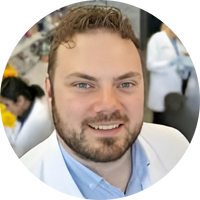
Associate Professor Garron Dodd, Head, Metabolic Neuroscience Research Laboratory, Dept of Anatomy & Physiology, was awarded the 2024 NHMRC Marshall and Warren Innovation Award for his project ‘Turbocharging Treatments for Type-2 Diabetes.’
Type-2 diabetes presents a growing global health crisis with limited long-term treatment options. Current therapies like Ozempic and Wegovy (glucagon-like peptide-1 agonists) frequently lose their effectiveness over time due to the onset of drug resistance.
This project seeks to understand why this resistance occurs in Type-2 diabetes and to develop new treatments that enhance the effectiveness of these drugs.
“We have identified that the neurons in the brain, through which Ozempic operates, become encased in a glue-like substance known as the extracellular matrix. In Type-2 diabetes, this matrix becomes much more prominent, hindering the drugs' intended action on the brain,” explains A/Prof Garron Dodd.
“Our aim is to understand how this occurs and to develop innovative drugs that target the brain's extracellular matrix to restore sensitivity to diabetes medications. The research has the potential to revolutionise diabetes and obesity management, offering a hopeful path toward long-term remission and addressing a significant healthcare need.”

Associate Professor Louise Cheng, Dept Anatomy & Physiology, Group Leader at Sir Peter MacCallum Department of Oncology and Head, Stem Cell Growth Regulation Laboratory at the Peter MacCallum Cancer Centre, was awarded the 2024 NHMRC Marshall and Warren Ideas Grant Award for her project ‘Organ competition: how do tumours grow at the expense of other tissues in cancer cachexia?’
Cachexia is a metabolic syndrome of weight loss that affects 80 percent of people with advanced cancer.
Associate Professor Cheng explained that as tumours develop and their metabolic demand increases, the tumour turns to using the body’s muscle and fat for energy to grow.
“There are currently no effective treatments or ways for diagnosing cachexia yet it significantly impacts a patient’s ability to withstand treatment,” she said.
“We will use both patient samples and a Drosophila fly model of cancer cachexia to help us understand how organs communicate with each other and to help us find out how the competition for resources between tumours and ‘other’ tissues can drive cancer cachexia.”
“It is important for us to comprehend how tumours send signals that lead to the breakdown of muscle and fat, and to fully understand why such a process is beneficial for the tumour. Understanding these processes will help us develop targeted interventions that could alleviate cachexia.”
This work is a collaboration between Associate Professor Cheng’s lab and clinical collaborators Dr Hyun Ko from Cancer Imaging, and Professor Sandy Heriot from Cancer Surgery. It really speaks of the bench to bed-side approach.
27 March 2025, Awards and Achievements, 'University of Melbourne researchers receive NHMRC Research Excellence Awards.'
More information about the awards and full list of recipients is available on the NHMRC website.